

Capelin is rolling in Newfoundland. The Spectacular Phenomenon of Capelin Rolling in Newfoundland every spring and summer, from mid-June to July, the shores of Newfoundland come alive with one of nature’s most mesmerizing events: The Capelin Roll. This annual spectacle draws thousands of tiny silver‐bodied capelin to shallow sandy beaches as they come in to spawn. The resulting beachside frenzy isn’t merely a local curiosity but a vital ecological event, a cultural celebration, and a top-ranked natural wonder of Atlantic Canada.
What Is the Capelin Roll?
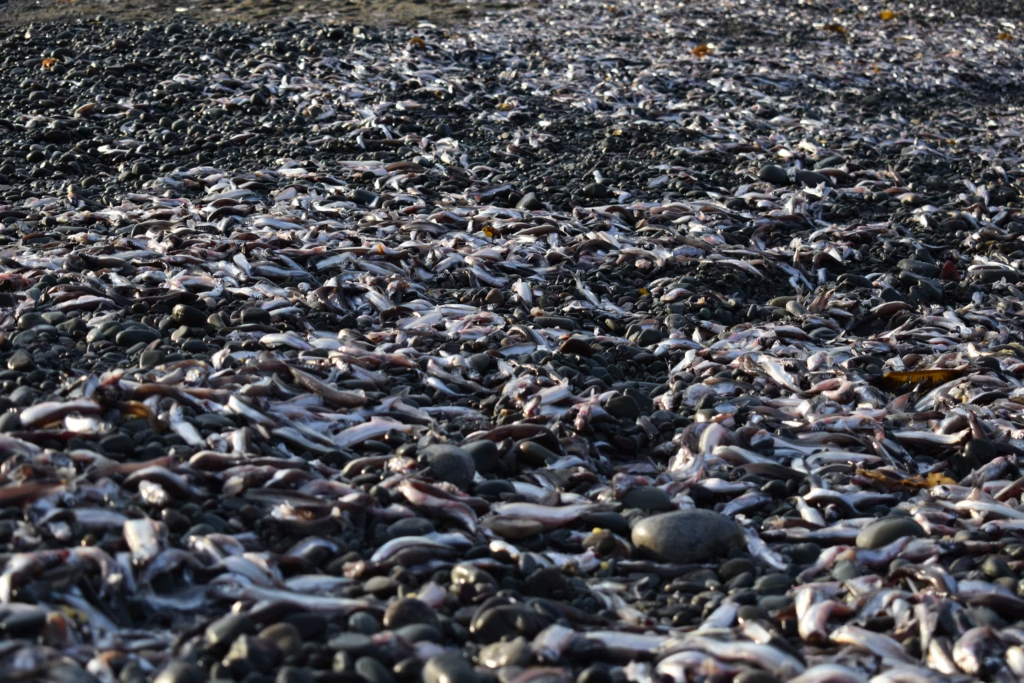
Essentially, Capelin rolling in Newfoundland refers to the dramatic appearance of millions of capelin eggs and bodies in the water. As research shows, Capelin migrate inshore specifically to spawn on sandy or gravelly beaches. Once there, they flip‑flop in the waves, releasing eggs and subsequently perishing at high rates, especially the male’s Capelin.
This mass breeding frenzy attracts predators of humpback whales, cod, seabirds, and seals, which feed visibly in the shallows. Entire coves are named after Capelin, and locals eagerly monitor social media platforms like Facebook to know precisely where the Capelin rolling is occurring.
Capelin aren’t just beach spawners. They’re keystone forage fish. Species such as cod, whales, puffins, and seabirds rely heavily on Capelin during spawning season. Fortunately, indigenous and small‑scale harvesting timed post‑spawn generally doesn’t harm the overall population, while commercial fishing is strictly regulated to protect stock levels.
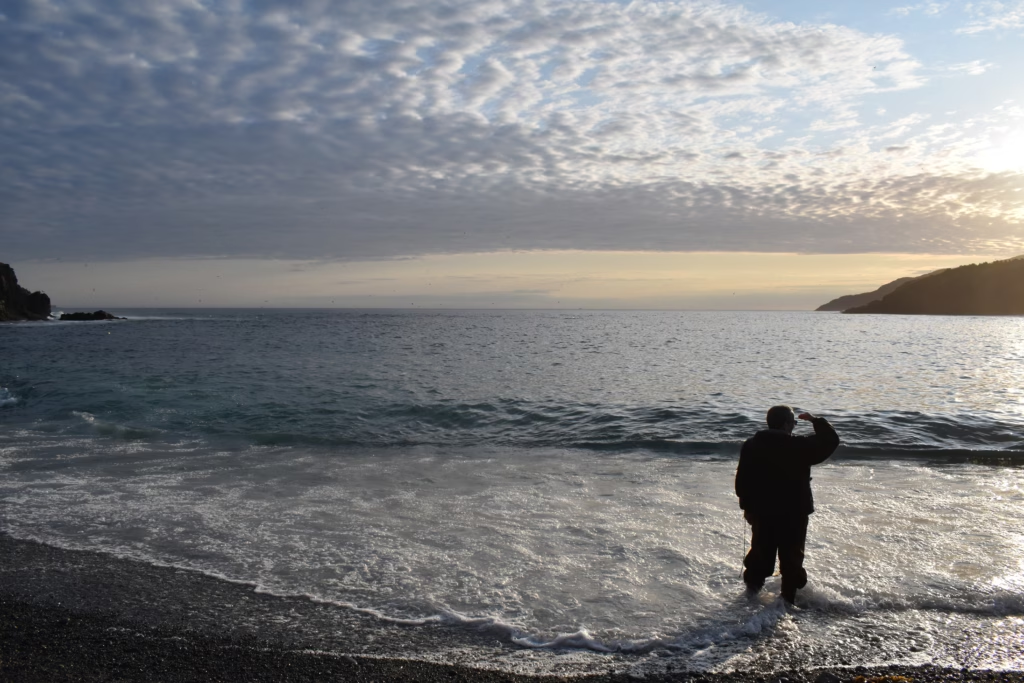
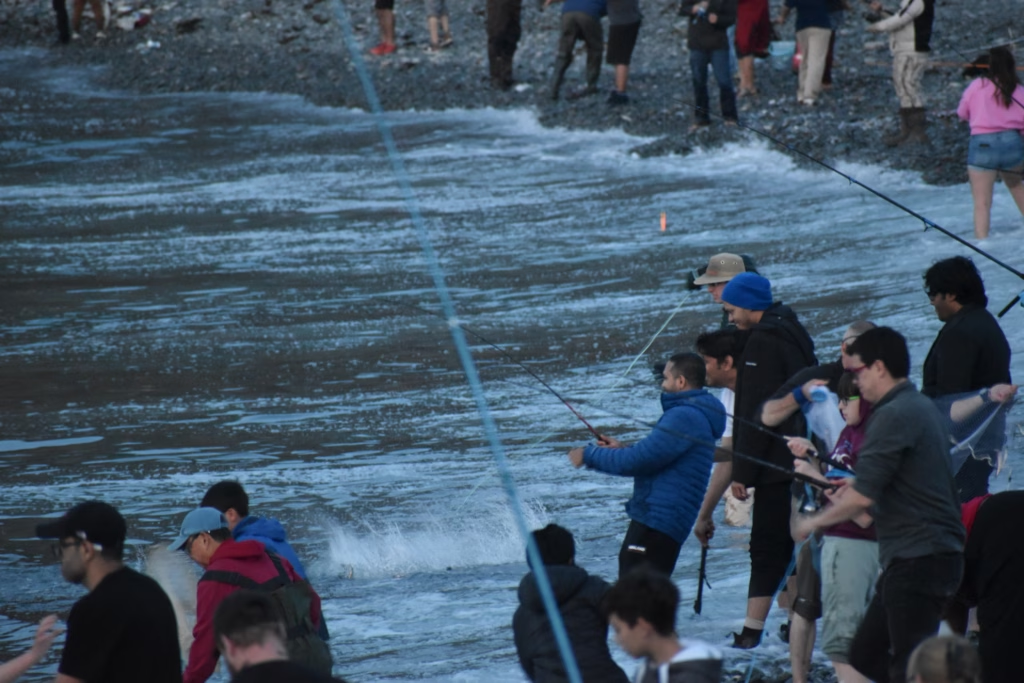
Beyond ecology, Capelin rolling in Newfoundland is rooted in culture. It signals the actual arrival of summer: “Summer doesn’t start until the capelin roll,” locals say around the bay. Communities gather on beaches, flash their nets, scoop up handfuls of Capelin, and roast them over campfires. Children shriek as fish flop in buckets, and seasoned chefs pan‑fry, salt‑dry, or pickle their catch. In some coastal areas beside the Gulf and St. Lawrence, capelin roll celebrations resemble festivals: campfires, storytelling, moonlight waits, and communal laughter paint a timeless scene.
How to Witness the Capelin Roll.
If you’re keen to experience Capelin rolling on Newfoundland shores:
Check timing: Spawning rolls typically occur from mid-June to July, but exact dates vary depending on temperature and tides. Track local sightings: Sites like Facebook update real‑time reports of people sharing pictures and videos in Groups.
Visit hotspot beaches: Middle Cove, Witless Bay, Beachy Cove, Outer Cove, and others are reliable hotspots.
Bring gear: Dip nets, buckets, waders, picnic blankets, and a willingness to join the celebration.
The capelin roll in Newfoundland is more than a tourist attraction: it’s where ecology, culture, and economy converge. As you scoop silverfish from the ocean, they’re taking part in an ancient chain woven by ocean currents, plankton blooms, marine predators, and human traditions.
Communities thrive on these events socially, economically, and spiritually. And by sharing the magic of Capelin rolling through blogs, social media, and word of mouth, Newfoundlanders continue to protect and celebrate this delicate balance.
Capelin Rolling in Newfoundland:
What is Capelin rolling in Newfoundland?
Simply put, the term capelin roll refers to the mass arrival and spawning of Capelin rolling in Newfoundland water. During spring and summer, millions of these small smelt swim into shallow beaches to lay eggs in gravel and sand. Once onshore, the fish flip‑flop in waves, a natural spectacle that draws people, birds, fish, and whales.
When does the capelin roll usually happen in Newfoundland?
Typically, the capelin roll in Newfoundland occurs between mid‑June and mid‑July. However, because it depends heavily on water temperature and tidal conditions, the exact date varies from year to year. Communities often refer to local sightings and weather patterns to anticipate the roll.
Where are the best places to see Capelin rolling in Newfoundland?
Prime beaches include Middle Cove, Holyrood, Witless Bay, Beachy Cove, Outer Cove, and other coves named after Capelin across the province. These spots offer easy access for visitors and often serve as the first reports of Capelin rolling in Newfoundland water.
Why do Capelin roll on Newfoundland beaches?
Capelin roll inshore to spawn. After feeding offshore on plankton and krill, Capelin migrate to shallow sand or gravel to breed. This spawning strategy leads to mass gatherings, egg deposition, and high male mortality, all of which are key to the ecosystem.
What predators feed during the capelin roll in Newfoundland?
During capelin rolling, predators flock. Humpback whales lunge with gusto, cod lurk offshore, puffins dive for fish, and seabirds and seals scavenge post‑spawn remains. Essentially, the capelin roll fuels an impressive and colourful marine feeding party.
Can I collect Capelin during the roll, and is it legal?
Yes, and it’s part of tradition. Coastal communities legally collect Capelin using nets or buckets post‑spawn. Because most Capelin die naturally after spawning, small‑scale personal harvesting has negligible impact. However, commercial harvest is regulated to protect the stock.
How do people prepare Capelin caught during the roll?
Local favourites include pan-frying Capelin after flouring them, roasting them over campfires, salting and drying them for storage, or pickling them for preservation. Some folks even freeze or smoke them. Each method highlights the fish’s mild, herring‑like flavour and celebrates Capelin rolling in Newfoundland as a culinary event.
How has Capelin rolling in Newfoundland changed over time?
Climate change has shifted spawning times: in certain years, rolls have moved later into July or even early August.
Why is the Newfoundland capelin roll so important?
First, ecologically, Capelin links lower‑trophic plankton to larger predators. Second, culturally, the roll marks the arrival of summer and brings communities together in celebration. Third, economically, it supports subsistence gathering and tourism while acting as a barometer for marine health.
What does it mean when someone says, “The capelin are in”?
When Newfoundlanders say, “The capelin are in,” they’re referring to the moment when Capelin begin rolling onto the beaches to spawn. It’s a signal for locals to gather, grab their nets, and prepare for an iconic part of the Newfoundland summer. It also means whale sightings and seabird frenzies are likely nearby.
What Capelin Rolling Means to Newfoundlanders. To the uninitiated, Capelin rolling in Newfoundland may appear as a simple coastal curiosity. But to Newfoundlanders, it’s a treasured part of our identity. Generations have gathered at Middle Cove Beach or Portugal Cove with dip nets in hand and boots on the shoreline, waiting for the telltale glimmer of silver in the cold Atlantic water.
Locals can recall stories passed down from grandparents of catching Capelin in their hats or filling wheelbarrows for salting and drying. Children play in the shallow while elders exchange it, and the crackling of bonfires competes with the rolling of waves. This deeply rooted connection is why many say: “You haven’t experienced Newfoundland until you’ve witnessed the capelin roll.
These are the best travel planning resources you should use.
Looking to book your trip to Newfoundland and Labrador? Use these resources that are tried and tested by other travellers like you who vacation in Newfoundland and Labrador. Bookmark these links. Save them for future reference.
Booking Flights, Hotels or B&B: Start planning your next vacation trip by finding the best flight, hotel or b&b deals. Book Here
Finding things to do in Newfoundland and Labrador on TripAdvisor and Viator is not hard. Enjoy boat tours, whale watching, icebergs watching, kayaking and other activities.
You can also find low prices on hotels, B&B and cabins with these two providers. If you are located in Canada, the USA, the UK or Europe, use Booking.com, and if you are in Canada, the USA or anywhere else, use TripAdvisor.
Car Rental: Here is what we recommend:
When you book, you can compare prices and find the best vehicle for your trip. Economybookings.com Display all their vehicle on the website with a detailed description. They display high-quality photos and a user rating as well. Qeeq.com serves road trip travellers like you from different countries by working with car rental companies worldwide.
Get compensated if your flight is delayed or cancel
AirHelp and Compensateair will help you with flight delays, cancellations, or denied boarding. All you need to do is to submit your flight details, and they will handle the claim process on your behalf. They will handle all the paperwork, airline negotiations, and legal proceedings.
Do you need more help planning your trip?
Check out our Resources Page, where we highlight all the resources and companies you can use to assist with your planning.
Where can I find more information about travelling to Newfoundland and Labrador? Here are helpful resources for planning your trip:
Newfoundland and Labrador Tourism | Travel Canada | The Rooms Provincial Museum